AltafHussain Statement on Democracy, Political Dynasties, and the Future of Pakistan
|
|
Posted on: 7/23/2026
|
AltafHussain Statement on Democracy, Political Dynasties, and the Future of Pakistan
Pakistan is presently governed under the banner of democracy by two dominant political families: the Sharif family and the Bhutto family. I contend that the concentration of leadership within these families represents dynastic politics rather than genuine democratic practice, as political power has largely been transferred from one generation to the next instead of being determined through open and equal political competition.
It is my view that both the Pakistan People’s Party (PPP) and the Pakistan Muslim League-Nawaz (PML-N) emerged with the support of Pakistan’s military establishment during different periods of the country’s political history.
Following Sir Shah Nawaz Bhutto’s entry into public life, his son, Zulfikar Ali Bhutto, became a leading political figure. Subsequently, Benazir Bhutto, Murtaza Bhutto, and later Bilawal Bhutto Zardari assumed prominent political roles within the party. Likewise, leadership within the Sharif family expanded from Nawaz Sharif to Shehbaz Sharif, followed by Hamza Shehbaz and Maryam Nawaz, illustrating the continued dominance of family-based political leadership.
I further said that both political families have repeatedly benefited from state resources while holding public office. I also claim that members of these families possess significant landholdings and assets in Pakistan and abroad, including properties in the United Kingdom, the United States, Switzerland, and other countries. Allegations regarding the wealth and financial dealings of former President Asif Ali Zardari have also been widely discussed in the public domain over the years.
It is my view that Sir Shah Nawaz Bhutto acquired extensive landholdings in Sindh during the British colonial period due to his loyalty to the colonial administration, and that successive generations of the Bhutto family maintained close working relationships with various military governments.
General Ayub Khan provided Zulfikar Ali Bhutto with the opportunity to enter national politics, and Bhutto served in his government. The Pakistan People’s Party was established during Ayub Khan’s rule and later operated under General Yahya Khan’s administration, with Bhutto serving in senior governmental positions during both periods.
Similarly, Nawaz Sharif rose to national prominence during the rule of General Muhammad Zia-ul-Haq, whose administration supported his political development. Following General Zia’s death, Nawaz Sharif publicly stated his intention to continue what he described as General Zia’s mission.
From my perspective, Pakistan’s political history demonstrates that the military establishment has exercised significant influence over the formation, dismissal, and transition of governments, as well as over the political prominence of influential families, large landowners, and tribal elites.
I believe this political structure has rarely created equal opportunities for individuals from poor, lower-middle-class, or middle-class backgrounds to attain national leadership.
In my opinion, the Awami League of former East Pakistan did not receive equal acceptance because its leader, Sheikh Mujibur Rahman, came from a modest lower-middle-class background rather than a wealthy or feudal family.
Likewise, I contend that the Muttahida Qaumi Movement (MQM) was not accepted because it was not founded by influential feudal or tribal elites. I maintain that its founder, Altaf Hussain, came from an ordinary middle-class family. State institutions took extensive measures to restrict the party’s nationwide growth, imposed limitations on its leadership, and conducted campaigns aimed at damaging its public image.
Similarly, I believe that Pakistan Tehreek-e-Insaf (PTI) Chairman Imran Khan, who also came from a middle-class background rather than a traditional political dynasty, encountered comparable obstacles while in government.
Despite repeated allegations of corruption and numerous political controversies involving the country’s two principal political families, they continue to occupy dominant positions within Pakistan’s political system.
I respectfully call upon Field Marshal Syed Asim Munir to help facilitate Pakistan’s transition toward a genuinely democratic political order by ensuring that the will of the people is respected, political freedom is upheld, and all political parties are allowed to compete on equal terms.
I call for new, free, fair, transparent, and impartial elections, with the elected government reflecting the genuine mandate of the Pakistani people.
I also urge Pakistan’s policymakers and decision-makers to learn from past experiences and ensure that Pakistan’s sovereignty, national interests, and democratic institutions are never compromised for external interests.
Pakistan is currently passing through a sensitive and challenging period. I respectfully encourage the armed forces to remain focused on their constitutional responsibility of defending the country’s borders while allowing civilian institutions to perform their constitutional responsibilities independently.
I believe that all state institutions and political stakeholders should acknowledge one another’s respective roles and work together in the national interest to build a stronger, more stable, and more prosperous Pakistan.
Finally, I call for the release of Imran Khan and his detained political colleagues, the safe recovery of missing MQM workers, the release of MQM members whom I believe have been unlawfully detained, and the removal of what I describe as the undeclared restrictions imposed on MQM and on me.
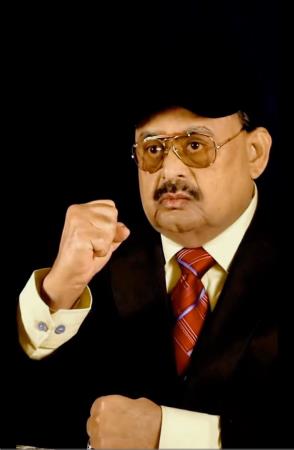
Altaf Hussain
London, United Kingdom
433rd Public Address via TikTok
(Watch complete address  ) )
|
9/29/2026 7:51:37 AM
|
|